
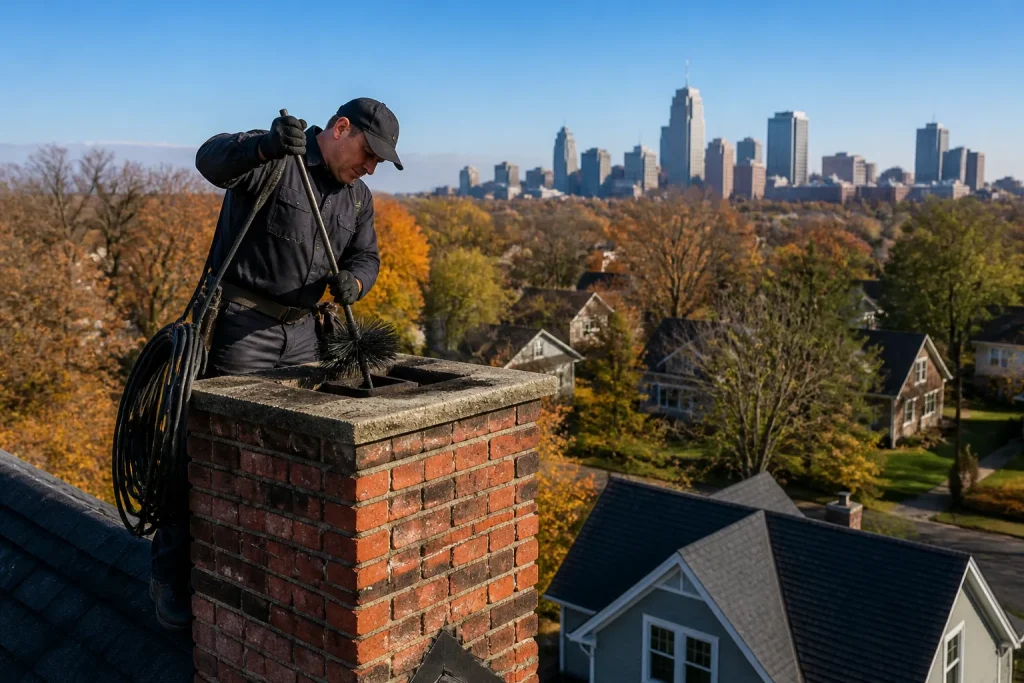
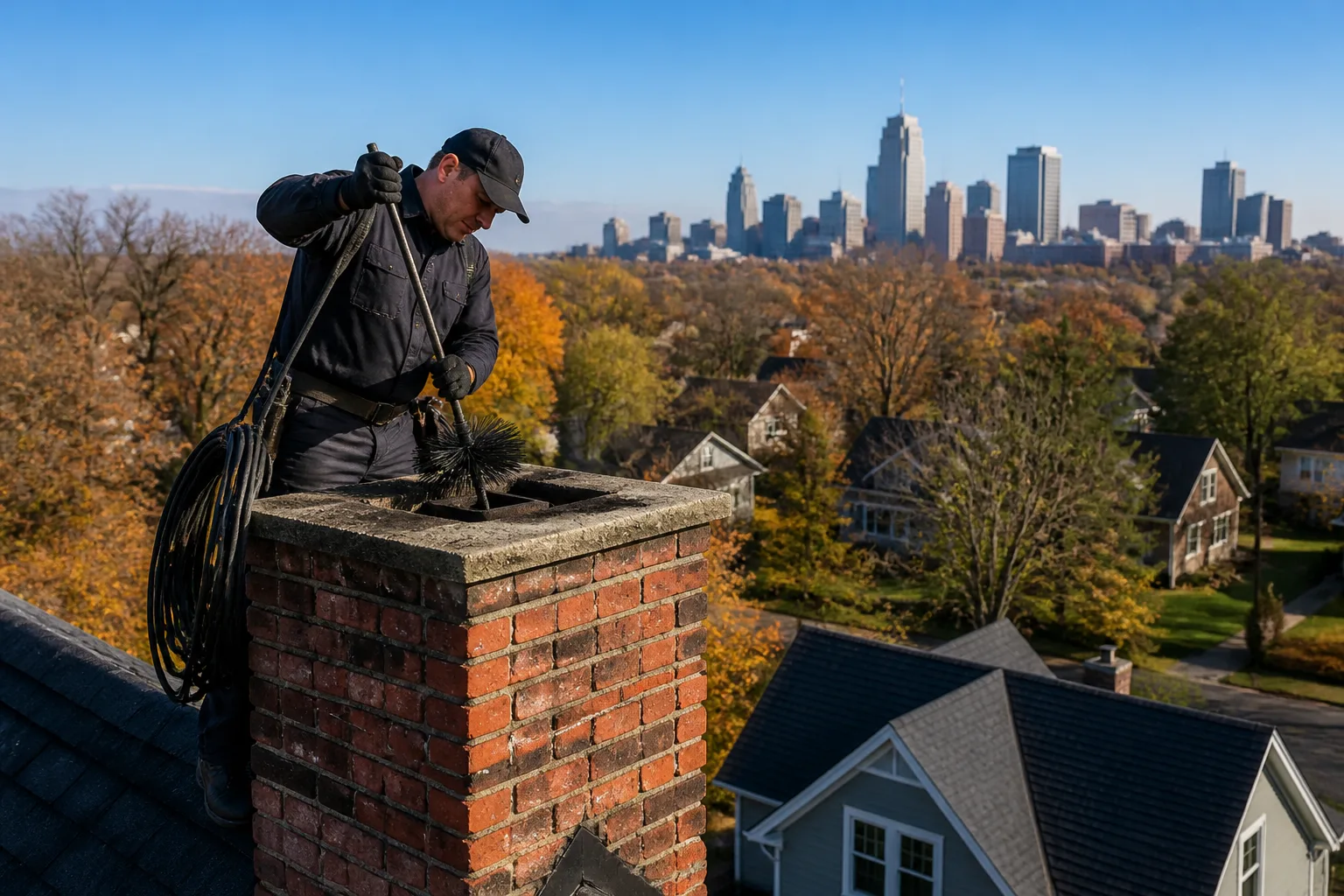
HeatShield Chimney Sweep in Indianapolis: A Homeowner’s Guide
HeatShield is a ceramic sealant system applied to the inside of a clay flue to seal hairline cracks and minor joint gaps, and it only works when the flue is swept clean and dry first. In Indianapolis, where freeze-thaw cycles chew at older tile, it’s often the sensible middle option between ignoring a damaged flue and paying for a full stainless reline. If you’d rather leave the assessment to trained hands, call (888) 560-8179.
Here’s the mistake we hear about most: someone reads that HeatShield fixes cracked flue tile, orders the material, and rolls it onto a flue that hasn’t been swept in years. It fails, and the homeowner blames the product. The product is fine. The prep was missing.
What Is HeatShield, Exactly?
HeatShield is a resurfacing system for the interior of a masonry chimney flue, not a liner you slide down the chimney and not a cosmetic coating. The applicator pulls a fitted foam plug through the flue, spreading a ceramic sealant across the tile faces and into the joints as it travels. When it cures, the flue has a smooth, heat-resistant surface where cracks and gaps used to be.
It’s a different category of repair from the brands we stock for full relining work. DuraFlex stainless liners replace the flue pathway with a new metal one. HeatShield repairs the existing clay tile in place. Those are two different answers to two different problems, and choosing wrong is expensive.
What HeatShield is built to address:
- Hairline cracks in flue tile that haven’t broken the tile apart
- Spalling, where tile faces are flaking but the tile body is still sound
- Minor joint separation between tile sections
- Rough interior surfaces that collect creosote and are hard to sweep clean
What it can’t fix: missing tile, tiles that have shifted out of alignment, cracked chimney crowns, damaged mortar in the exterior stack, or a flue that’s simply the wrong size for the appliance. Those need masonry repair or a liner, and any company that tells you HeatShield covers everything isn’t being straight with you.
Why the Sweep Comes Before the Sealant, Every Time
HeatShield bonds to the clay tile. It does not bond to creosote, soot, or moisture, and that single fact is why the prep work isn’t optional. A dirty flue means the sealant sticks to the dirt instead of the tile, and the coating lifts, flakes, or fails outright. A wet flue is worse: trapped moisture under a sealed surface has nowhere to go.
So the job runs in a fixed order. A full chimney sweep removes the creosote layer first. Then a Level 2 inspection, which includes a camera run of the flue interior, tells us what’s actually there. Then, and only then, can anyone say whether resurfacing is the right call.
That inspection is looking for specific things:
- The size and pattern of the cracks, and whether they run through the tile or just the surface
- Whether any tile has spalled down to a point where the flue wall is compromised
- Joint gaps and whether they’ve opened wide enough to let heat or gases past the tile
- Signs of moisture intrusion from above, which has to be solved before any coating goes on
- The flue’s size relative to the appliance, since an oversized flue drafts poorly no matter how smooth it is
A camera inspection means you see the flue yourself instead of taking our word for it. That matters when the recommendation is a repair you can’t see from the living room.
Why Indianapolis Chimneys Take a Beating
Indianapolis sits in a climate that swings hard between freezing and thawing through the winter, and masonry does not love that rhythm. Water gets into a hairline crack during a mild spell, freezes overnight, expands, and widens the crack a little more. Repeat that across a season and a flue that started with a thin fissure can end up with tile that’s spalling and joints that have opened up.
That cycle is why we see so many mid-life chimneys here with cracked flue tile but an otherwise solid stack. The structure is fine. The interior liner surface has taken the wear.
For those chimneys, HeatShield makes economic sense in a way it might not in a milder climate. You’re not rebuilding. You’re not paying for a full stainless reline if the tile is still structurally sound. You’re resurfacing the interior so the flue can do its job again, and the work holds up against the next round of freeze-thaw. For a homeowner in Indianapolis weighing repair options, that middle path is often the one that gets the flue back in service without overcorrecting.
HeatShield vs. a Stainless Liner: Which Do You Actually Need?
This is the comparison that matters, and the honest answer depends entirely on the condition of the flue tile. HeatShield is a repair of sound-but-damaged tile. A stainless liner is a replacement of the flue pathway. Neither one is universally better; they solve different conditions.
HeatShield is typically the right choice when:
- The clay tile is intact and in place, with cracks that are hairline or surface-level
- Spalling is limited and hasn’t thinned the flue wall
- Joints have separated a little but the tile hasn’t shifted
- The flue is properly sized for the appliance and the chimney crown is sound
A stainless liner is the right choice when:
- Tile is missing, crumbling, or has shifted out of alignment
- The flue is oversized or undersized for what’s venting into it
- You’re converting to a new appliance that calls for a specific flue size
- The chimney has no clay liner at all, which is common in older Indianapolis homes
We keep DuraFlex liner systems on hand for the second list, and HeatShield for the first. A company that only offers one of the two will tend to recommend the one it has, which is worth remembering when you’re comparing quotes.
How Long Does HeatShield Last, and What Should You Expect?
A properly applied HeatShield coating on a clean, dry, structurally sound flue is a long-term repair, not a stopgap. It’s designed to hold up under normal venting conditions for years, and the manufacturer’s warranty terms are specific about what’s covered and what voids the coverage. Ask for those terms in writing before you commit.
What matters more than a number is what can shorten the life of the coating:
- Applying it over creosote or soot, which is the most common failure cause
- Applying it to a damp flue without allowing proper drying time
- An unresolved water problem above the flue, which will keep pushing moisture into the masonry
- Burning habits that drive flue temperatures or creosote buildup beyond normal ranges
Compare the true cost against a liner by asking what each one actually delivers. A liner replaces the flue; HeatShield restores the one you have. When the tile is sound enough for resurfacing, the resurfacing path usually costs less and involves less disruption. When it isn’t, a liner is the honest answer, and we’ll tell you so.
When to Call a Pro
If you’re seeing cracked or flaking tile on a camera inspection, notice a strong creosote smell, or your sweep report mentions “damaged flue liner” without telling you what kind of damage, that’s the moment to get a second look before anyone sells you a repair. The recommendation should be backed by photos from inside the flue, and you should be able to see them.
It’s also the moment to ask whether HeatShield is even on the table. If a company only quotes full relining, ask why. And if a company quotes resurfacing without a sweep and camera inspection first, walk away.
Related services in Indianapolis: our chimney sweep and inspection visit is where every HeatShield conversation starts, and our dryer vent cleaning service covers the other exhaust system in your home that carries fire risk. Your dryer vent is a chimney too, in the sense that it moves hot exhaust and lint through a duct, and it clogs the same way a flue does. One call covers the whole system, and that’s how we like it.
The Bottom Line
HeatShield is a real repair option, not a patch, but it only works when the flue is clean, dry, and sound enough to hold the coating. In Indianapolis, where freeze-thaw cycles do steady damage to older tile, it’s often the sensible middle ground between doing nothing and a full reline. The honest answer for your chimney comes from a sweep and a camera inspection, not from a phone quote.
Our technicians have up to 8 years of experience, and we work with HeatShield, Gelco, Olympia Chimney, and Famco materials because they’re what professional restoration work is built on. We’ll tell you plainly when a repair can safely wait, and when it can’t. If you’re in Indianapolis and need help, Stellar Chimney Cleaning offers free estimates. Call (888) 560-8179.
Frequently Asked Questions
HeatShield pricing depends on the flue’s height, diameter, and condition, so it’s set per job by a written estimate after the sweep and inspection. Expect it to land below a full stainless reline when the tile is sound enough for resurfacing. Call (888) 560-8179 for an exact quote; estimates are free.
No. HeatShield bonds to the clay tile, not to creosote or moisture, and applying it over a dirty or damp flue is the most common reason the coating fails. A full sweep and a Level 2 camera inspection come first, every time. Call (888) 560-8179 to book the sweep.
Neither is better in the abstract. HeatShield repairs sound-but-cracked tile; a stainless liner replaces the flue pathway entirely. If your tile is missing, shifted, or the flue is the wrong size, a liner is the right answer. If the tile is intact with hairline cracks, resurfacing is usually the more cost-effective path. Call (888) 560-8179 and we’ll show you which one your flue actually needs.
You won’t know from the outside. A camera inspection of the flue interior is the only way to see hairline cracks, spalling, and joint separation clearly enough to make the call. That inspection comes standard with our sweep visit. Call (888) 560-8179 to schedule it.
Call (888) 560-8179. We answer 24/7. Fast dispatch from 7am to 7pm, Sunday through Friday.
Written by the team at Stellar Chimney Cleaning.
Need Chimney Cleaning Help?
Call Stellar Chimney Cleaning - licensed & insured, here with fast help in Indianapolis.
(888) 560-8179