
Last updated November 14, 2026
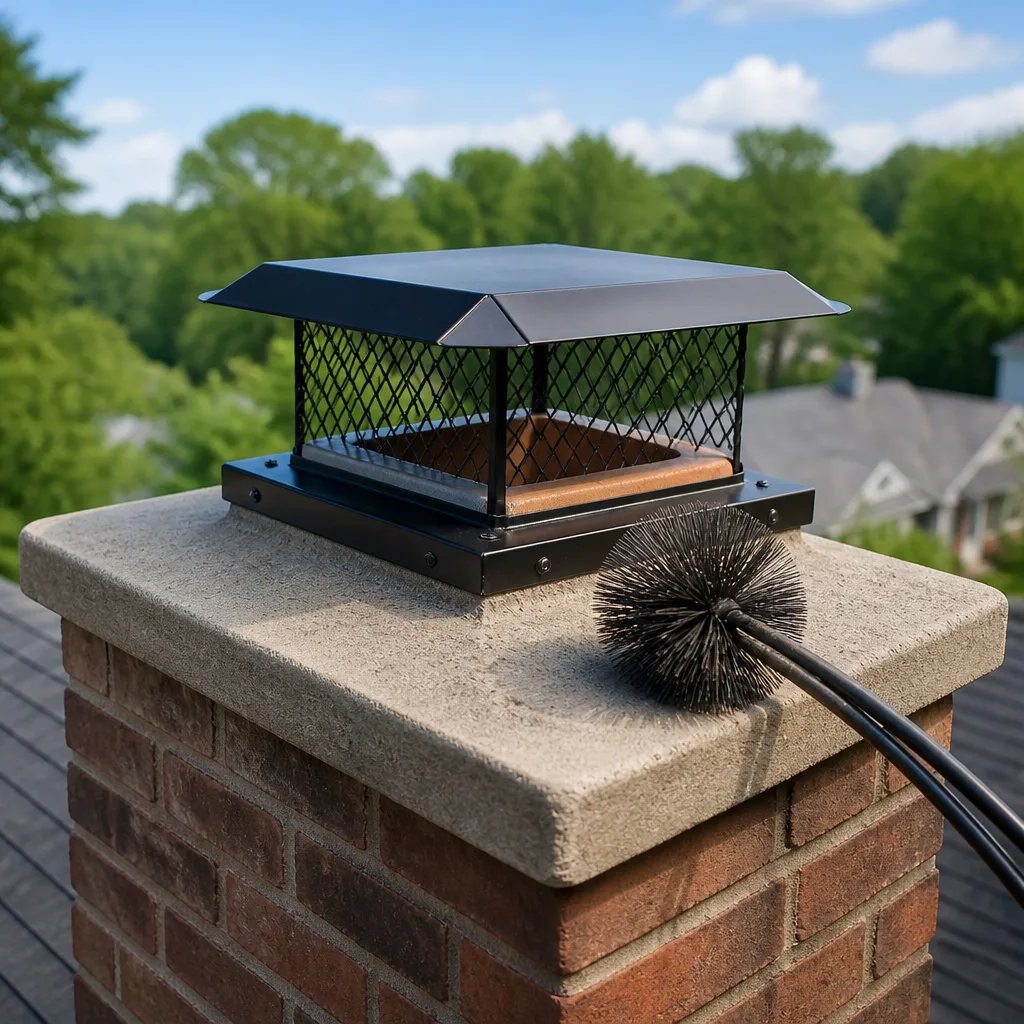 Sweep & inspection
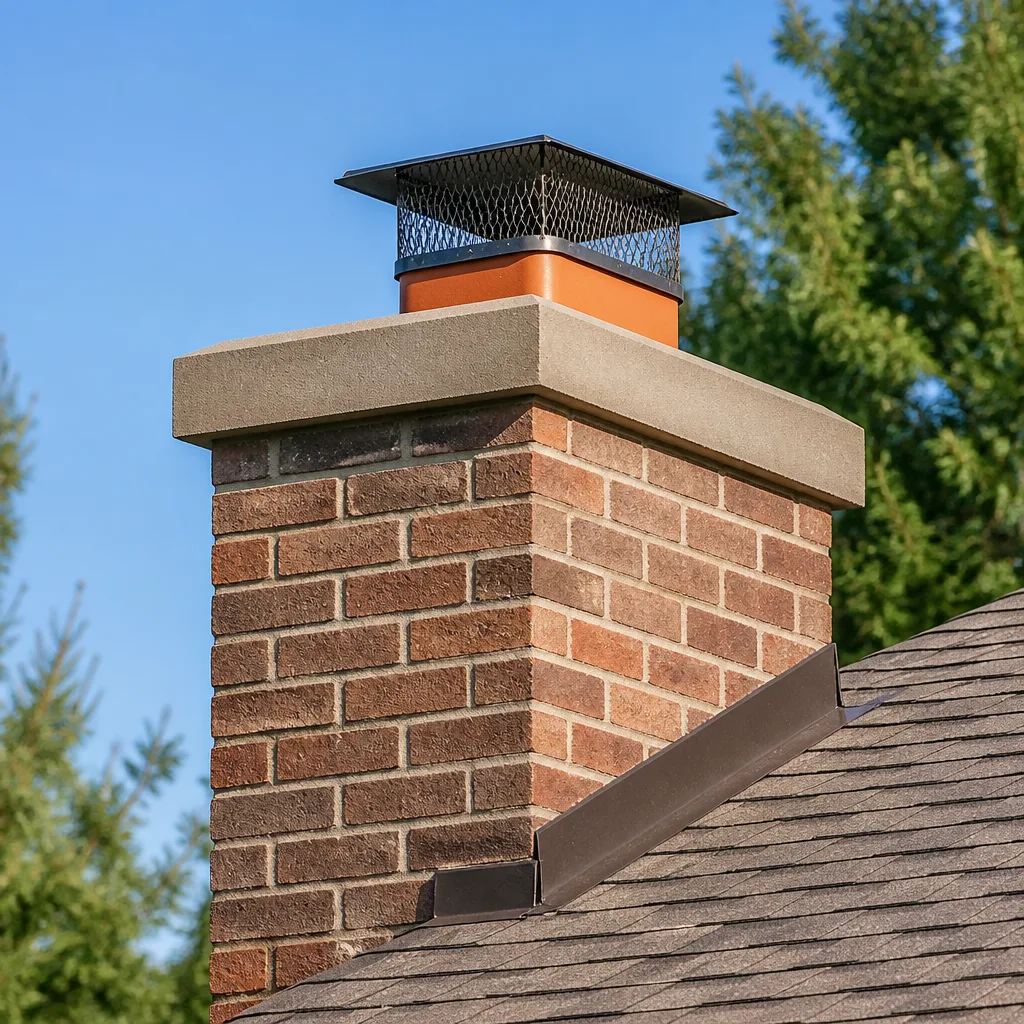 Caps & crowns
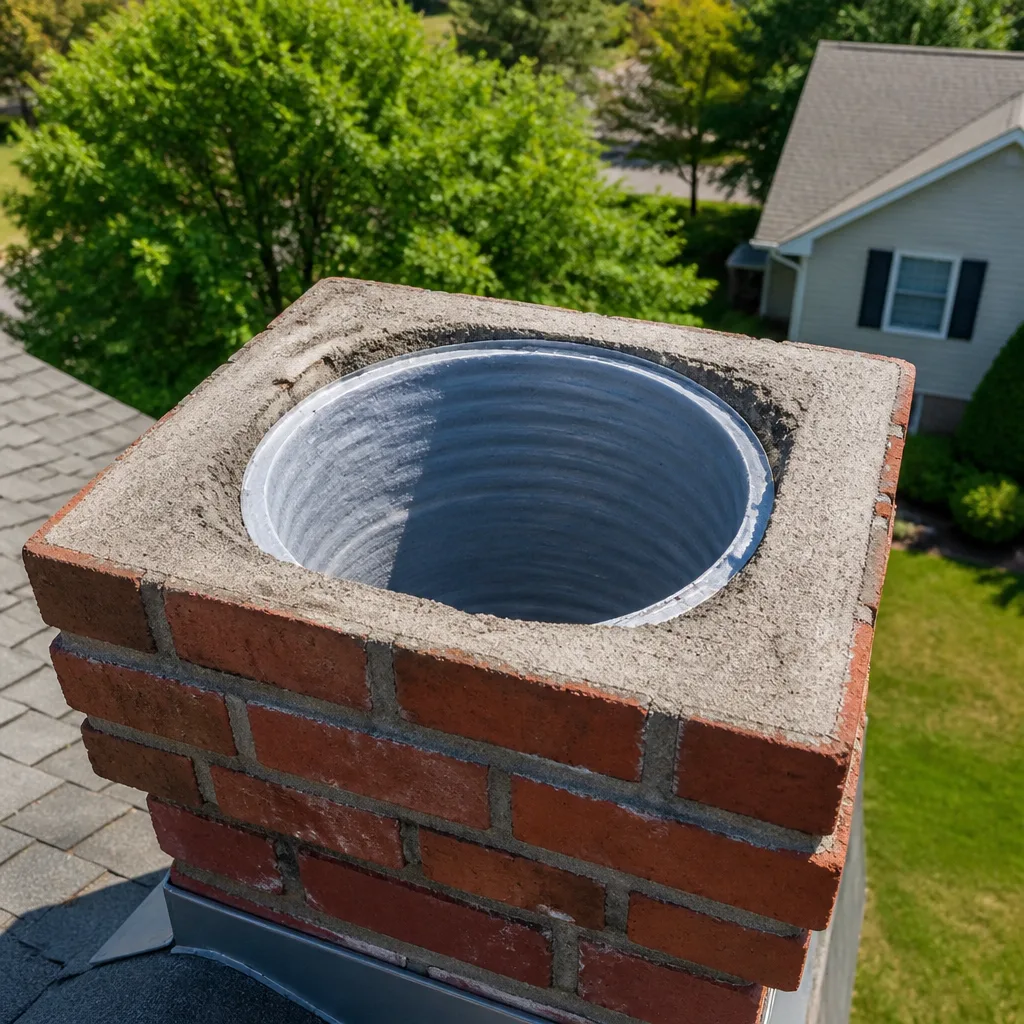 Flue relining
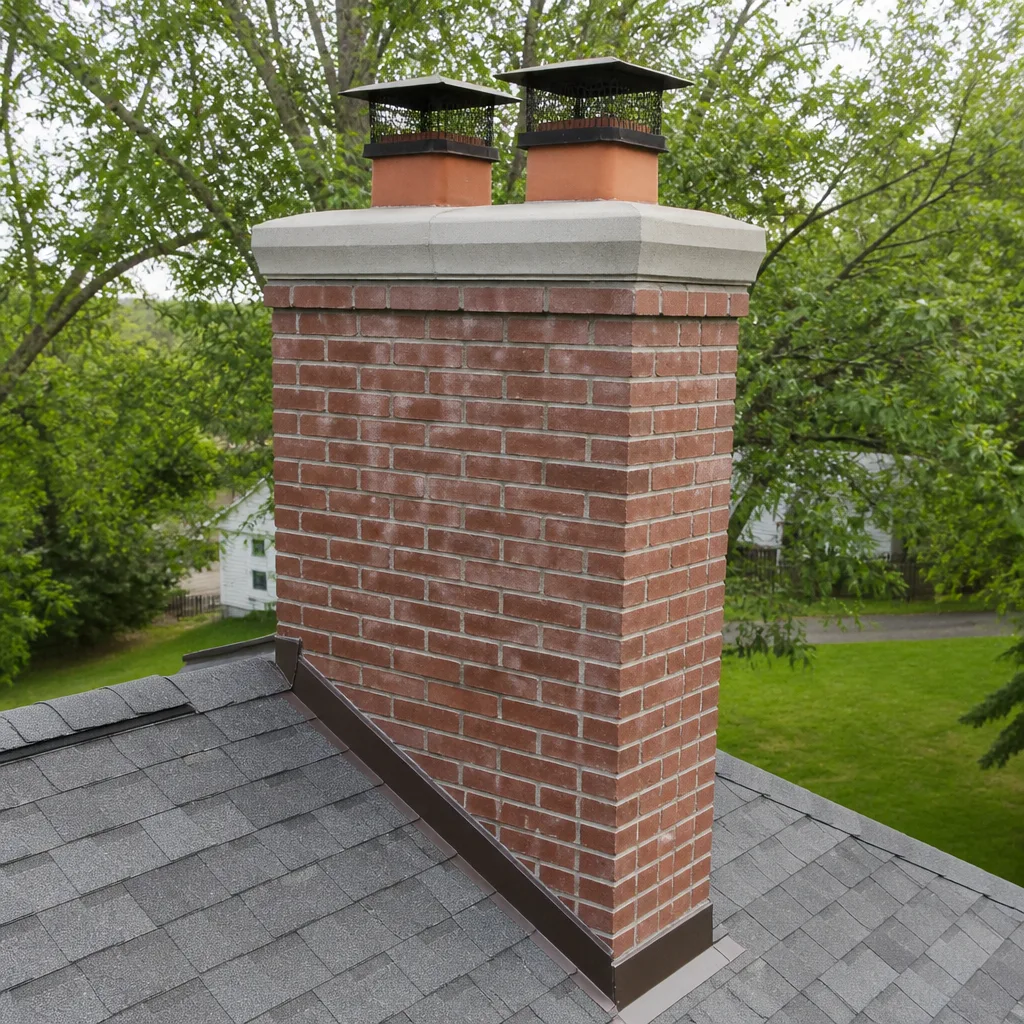 Masonry repair
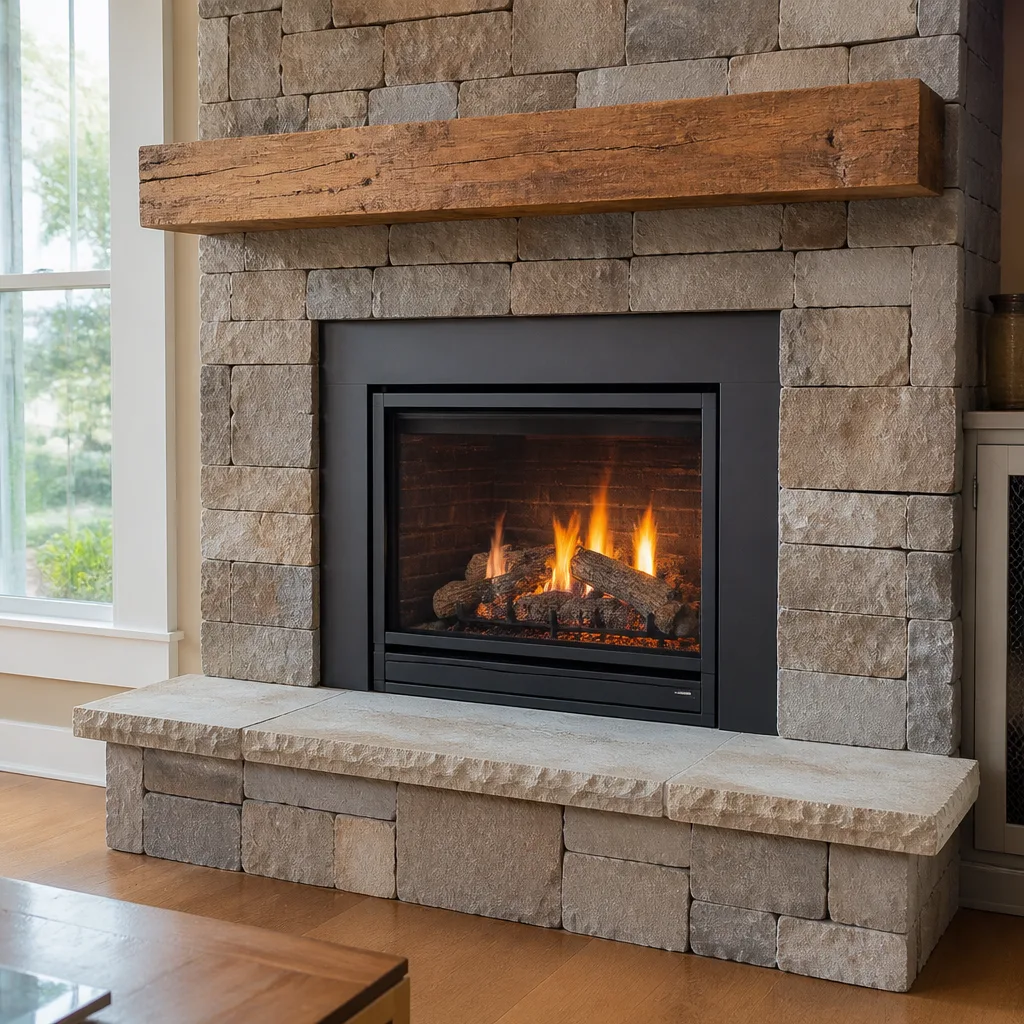 Gas fireplace service
Level 1 sweep and inspection to the NFPA 211 annual standard - flue, crown, cap, and flashing checked and photographed
Chimney sweep logs do not sweep chimneys. They loosen some creosote - which then falls where a brush and vacuum still have to collect it.
Chimney Cleaning Cost Breakdown: The Indianapolis Homeowner’s Reference for 2026
A $79 chimney cleaning special and a $249 chimney cleaning from a full-service specialist are rarely the same service with different profit margins. They’re usually different scopes of work, and the gap between them shows up right when the sweep finds something wrong. One price assumes a quick brush and a wave goodbye; the other assumes a camera, a written record, and somebody who can actually fix what they see. In this guide we break down what each line item covers in the Indianapolis market, what drives the price up or down, and how to read a repair estimate without guessing whether it’s fair. You’ll leave knowing what a fair all-in price looks like for a typical Indianapolis home.
Quick Answer
Chimney cleaning in Indianapolis typically runs $150 to $350 for a standard single-flue masonry chimney with a wood-burning fireplace, including a Level 1 inspection. Level 2 inspections with a camera add $100 to $250. Repairs are separate: a cap replacement runs roughly $150 to $400, crown coating $350 to $700, and a stainless liner install $2,500 to $6,000 depending on flue height and liner type. The written estimate sets the final price, and estimates are free.
Styles & brands we work with
- Sweep & inspection
- Caps & crowns
- Flue relining
- Masonry repair
- Gas fireplace service
Table of Contents
- Why Chimney Cleaning Quotes in Indianapolis Vary So Widely
- Itemized Cost Ranges for Every Common Chimney Service
- What Actually Drives the Price Within the Same Service
- The Real Cost of Deferring Maintenance
- Contractor-Grade Materials vs. Hardware-Store Alternatives
- What a Fair All-In Price Looks Like for a Typical Indianapolis Home
- How to Read a Chimney Estimate Line by Line
Why Chimney Cleaning Quotes in Indianapolis Vary So Widely
Three hundred percent price spreads are normal in this trade because “chimney cleaning” names a category, not a defined scope. When you call around chimney sweep companies and get wildly different numbers, you’re usually not comparing the same thing. You’re comparing a brush-and-go to a full diagnostic visit, and the difference is intentional.
Here’s what a low-end quote typically includes: a visual look from the firebox, a brush through the flue, a shop-vac pass, and a verbal “you’re all set.” That’s a real service and it has value. But it can’t tell you whether your crown is cracking, whether the smoke chamber is parged properly, or whether there’s a hairline crack in your liner that only shows on camera. Those things only turn up with time, tools, and a technician who’s trained to look for them.
A full-service quote includes the sweep but also a Level 1 inspection documented in writing, photos of anything flagged, and a conversation about what does and doesn’t need attention. If a repair is warranted, the same company can quote it because it carries the materials. That’s the difference between a $79 call and a $249 call: scope, not markup.
The variation also comes from the home itself. A single-story ranch in Broad Ripple with a straight flue is a different job from a two-story colonial in Meridian-Kessler with an offset flue, a damper that’s stuck open, and a firebox full of ash. Same service name, different hours on site, different price. Getting the scope in writing before booking is how homeowners stop guessing.
- Acknowledge the low and high quotes, then ask what each one includes
- Confirm whether inspection is Level 1 or Level 2
- Ask if photos or a written report come with the visit
- Ask what the technician will flag if they see it (creosote stage, crown, liner)
- Confirm the price you’re quoted is the price you’ll pay, in writing
Itemized Cost Ranges for Every Common Chimney Service
These are typical ranges for the Indianapolis market for a standard masonry home chimney. High-efficiency or prefab systems, unusual heights, and complex roof access push these up. The written estimate sets the final price.
| Service | Typical Range | What’s Included |
|---|---|---|
| Chimney sweep (single flue) | $150 – $350 | Brush, vacuum, Level 1 inspection, basic cleanup |
| Level 1 inspection | $75 – $150 | Visual check of accessible portions, report |
| Level 2 inspection (camera) | $175 – $400 | Camera in flue, video record, written findings |
| Level 3 inspection | $400+ | Access through wall or crown, for suspected hidden damage |
| Cap replacement (Famco or Gelco style) | $150 – $400 | Standard single-flue cap, install and seal |
| Crown coat / crown repair | $350 – $700 | Elastomeric crown coating or partial rebuild |
| Liner repair (HeatShield resurfacing) | $1,200 – $2,500 | Ceramic resurfacing for sound but cracked liners |
| Full stainless liner (DuraFlex) | $2,500 – $6,000 | New liner from crown to firebox, insulated |
| Animal removal (bird, raccoon, squirrel) | $250 – $600 | Removal, nest clearing, cap install |
| Dryer vent cleaning | $125 – $250 | Full run brush, booster check, exhaust verification |
A note on liner work: HeatShield resurfacing often comes in around half the cost of a full stainless liner because the existing liner structure stays in place and gets coated with a ceramic product. It’s not right for every chimney. When the existing liner is sound but has isolated cracks or gaps, HeatShield gives you a repair path that most sweep-only crews can’t offer. When liner sections have failed or the flue is unlined, a full DuraFlex stainless install is usually the durable answer.
Indiana’s seasons matter here. Central Indiana gets real cold stretches and a wet spring, and masonry chimneys here take freeze-thaw cycles every year. That’s why crown coating isn’t optional upkeep for Indianapolis homes; it’s what keeps water out of brickwork that would otherwise crack and spall over a few winters.
What Actually Drives the Price Within the Same Service
Two Indianapolis homes can both book “a chimney cleaning” and get quotes $150 apart. That’s not a pricing mystery; it’s a scope difference that comes down to four factors.
Flue height and roof access
A flue that terminates 12 feet up on a low-pitch roof is quick work. A flue that runs 25 feet above a steep hip roof with a two-story drop on one side requires more setup, more ladder work, and more time. Height and pitch both push the price up.
Creosote stage
Creosote builds in three recognized stages. Stage 1 is light soot and brushes away fast. Stage 2 is flaky and crusty and takes more work. Stage 3 is glazed and hard like a ceramic shell; it needs chemical treatment or rotary cleaning before the brush will touch it, and sometimes it can’t be fully removed in one visit. A chimney coming off several winters without a sweep often lands in Stage 2 or 3, and the price reflects that.
Chimney accessibility and interior
A firebox at floor level with a straight run to the roof is easy. A fireplace with a tight hearth, an insert blocking the damper, or a wood stove with a rear flue is slower work. Wood-burning inserts in particular need the technician to pull the unit or use a rear bypass to actually clean the flue.
Liner material and system type
Masonry flues with clay tile liners are the classic case. Factory-built prefab chimneys, high-efficiency gas venting, and wood stoves with stainless liners all clean differently and take different tools. Let the technician know what you have when you book; it prevents the “we thought it was a masonry flue” surprise.
Our technicians have up to 8 years of experience and have seen all these variations in Indianapolis homes. When we look at a job, we’re estimating where you land on all four factors, not just hitting you with a flat rate.
The Real Cost of Deferring Maintenance
The single most expensive chimney decision a homeowner makes is usually a skipped season. A $300 repair that gets put off for one year commonly turns into a $2,000 relining job. Not because the repair got more expensive, but because the underlying damage spread.
Here’s how that sequence plays out. A crown has a hairline crack. Water gets into the masonry above the firebox through the freeze-thaw cycle, which Indianapolis gets plenty of. The masonry cracks. The clay tile liner absorbs moisture and spalls. By the next inspection, the liner has gaps or cracks and the flue is no longer sound. The repair that was a $350 crown coat becomes a liner job. Add another year and the smoke chamber parging starts to fail, and the scope grows again.
The other deferral cost is fire risk. Creosote accumulates in the flue each time the fireplace is used. Glazed creosote (Stage 3) can ignite; that’s the mechanism behind most chimney fires, and they often burn hot enough to damage the liner without the homeowner knowing a fire happened. A sweep that removed that layer in the fall removes the fuel load. That’s the entire point of an annual inspection and sweep.
- Fall: Annual sweep and Level 1 inspection, before first fire of the season
- Flag repairs: Crown crack, loose cap, damaged damper – all get quoted with photos
- Fix this season: Small repairs get done now, before freeze-thaw
- Spring: Water damage season weeds out every repair that was deferred
- Next fall: The deferred repair is now a bigger scope and a bigger invoice
One more deferral angle specifically to Indianapolis: dryer vents. The “your dryer vent is a chimney too” idea isn’t clever marketing. Dryer vent lint is highly combustible, and code and industry practice treat the dryer exhaust system as part of the same household fire-risk picture as the fireplace flue. A blocked dryer vent is a fire risk whether or not your fireplace has ever been used. Cleaning both in the same visit is one call and one household safety ticket closed.
Contractor-Grade Materials vs. Hardware-Store Alternatives
When a repair estimate comes in higher than you expected, part of what you’re paying for is the material. The gap between a hardware-store stainless liner and a DuraFlex liner system isn’t a marketing claim; it’s a different product built to a different spec.
Hardware-store liner “kits” exist for the DIY market. They tend to be thinner gauge, less rigorously tested for continuous high-temperature exposure, and often ship without the insulation kit that makes a stainless liner perform as designed. Contractor-grade systems from brands like DuraFlex, Olympia Chimney, and Copperfield are specified by restoration contractors because they meet the specs that stand up over years of wood fires and freeze-thaw cycles. Famco and Gelco caps and venting components are the same story: they hold up to the wind, snow, and ice an Indianapolis winter actually delivers.
The same principle applies to crowns. A bag of mortar patched onto the crown in spring often cracks again by the following winter. Elastomeric crown coatings are designed to flex with the masonry as it moves through freeze-thaw, so they don’t crack at the first cold snap. A crown coat that lasts ten years is cheaper per year than two mortar patches that each last one.
- Stainless liner: DuraFlex systems vs. generic kits – right gauge, right insulation, right warranty structure
- Crown: Elastomeric coating vs. mortar patch – flex vs. crack
- Cap: Famco or Gelco solid components vs. thin stamped metal
- Liner resurfacing: HeatShield ceramic vs. no repair path at all for a sound-but-cracked liner
None of this is about paying premium for the name on the box. It’s about what the material does at year six. That’s the difference between repair and replacement, and it’s where clear understanding of material quality changes what you should reasonably pay.
What a Fair All-In Price Looks Like for a Typical Indianapolis Home
The most common house we see in Indianapolis is a 1960s to 1990s masonry chimney with a single flue, one fireplace, standard roof pitch, and a clay tile liner that’s either original or partially repaired. If that’s your home, here’s the fair all-in scope.
Baseline visit: A sweep plus Level 1 inspection in the $150 to $350 range. That’s the entire job for most homes. If your flue is clean and the crown, cap, and firebox all look good, you’re done and the invoice matches the estimate.
If the sweep finds something: The most common findings on a 1960s or 1970s chimney are a cracked crown, a missing or damaged cap, and some Stage 2 creosote buildup. A fair all-in repair for crown coat plus cap usually lands in the $500 to $1,000 range. Anything a technician recommends should come with photos so you can see what they’re seeing.
If the liner is compromised: A camera inspection establishing that the liner has failed or is compromised moves you into repair territory. HeatShield resurfacing of a sound-but-cracked liner is typically $1,200 to $2,500. A full DuraFlex stainless install is $2,500 to $6,000. A specialist should be able to quote both and explain which your chimney actually needs based on the camera record.
One Indianapolis nuance worth knowing: basements. Homes with a basement fireplace flue running separate from the main-floor flue and needing its own cleaning are common in older Indianapolis neighborhoods. If you have two flues, expect the sweep to touch both, and expect the price to reflect it. Mentioning “two flues” when you book is how you avoid a surprise on the day of.
Also, gas inserts and wood stoves change the scope. Gas logs still produce condensation that pits masonry and leaves a residue line; wood stoves have tighter clearances and often a rear or top flue that needs different tooling. Tell whoever’s booking the visit exactly what’s burning in the firebox.
How to Read a Chimney Estimate Line by Line
A fair chimney estimate is itemized and specific. A vague estimate (“chimney repair – $1,800”) is a red flag regardless of who hands it to you. Here’s the anatomy of one you can trust.
- Service name, with scope: “Level 2 inspection with camera” not just “inspection”
- Quantity: Linear feet of liner, number of caps, flues touched, hours if relevant
- Material specification: Brand and product where relevant (DuraFlex, HeatShield, Famco, Gelco) so you know what’s going in
- Photos attached: Every recommended repair should have a photo of the condition that justifies it
- Total price: One clear number, not a range that expands at the tail end
- Explicit “does not include”: What the estimate leaves out, so there are no add-ons later
If you get an estimate that doesn’t have these components, ask for them before you sign. If a technician can’t produce a photo of the damaged crown or the failed liner section, the recommendation isn’t evidence-based. That’s the single most important filter in this trade.
One other filter: can the company that quotes the repair actually do the repair? Many chimney sweeps inspect and then hand you a report you’ve got to shop around. The full-service model means the technician who inspected the liner also has access to DuraFlex, HeatShield, Olympia Chimney, and the cap brands, so there’s no “we’ll have to order that from somewhere” gap. At Stellar Chimney Cleaning, the services are chimney sweeping, dryer vent cleaning, and chimney repair – that’s the whole scope, and it covers the entire house’s exhaust-fire risk picture in one call.
Common Mistakes to Avoid
- Shopping purely on the lowest price. A $79 special and a $249 full-service sweep aren’t the same product. Ask what’s included, especially whether a Level 1 inspection and written report come with it.
- Skipping the annual inspection because the fireplace “looks fine.” Most liner damage and glazed creosote isn’t visible from the firebox. The inspection is what catches it before it becomes a relining job.
- Assuming a sweep report means you need the repair. Get photos. Ask what happens if you defer, and for how long that’s actually safe. A specialist should tell you when work can wait.
- Buying a generic liner “kit” online to save money. If the material isn’t specified for continuous wood-fire heat and doesn’t come with the right insulation, the savings disappear at the first failure.
- Ignoring the dryer vent because the fireplace is the obvious fire risk. It’s the other exhaust system in your home, and it accumulates fuel just like the flue does.
- Not telling the booking staff what’s actually in the firebox. Wood stove, gas insert, wood fireplace, two flues – each changes the scope, and lying to the scheduler just makes the technician’s day harder.
- Scheduling an inspection after the first fire of the season. Indianapolis fireplaces get more use in November than in October. Getting the sweep booked before burning season starts means the flue is clean when you first light up.
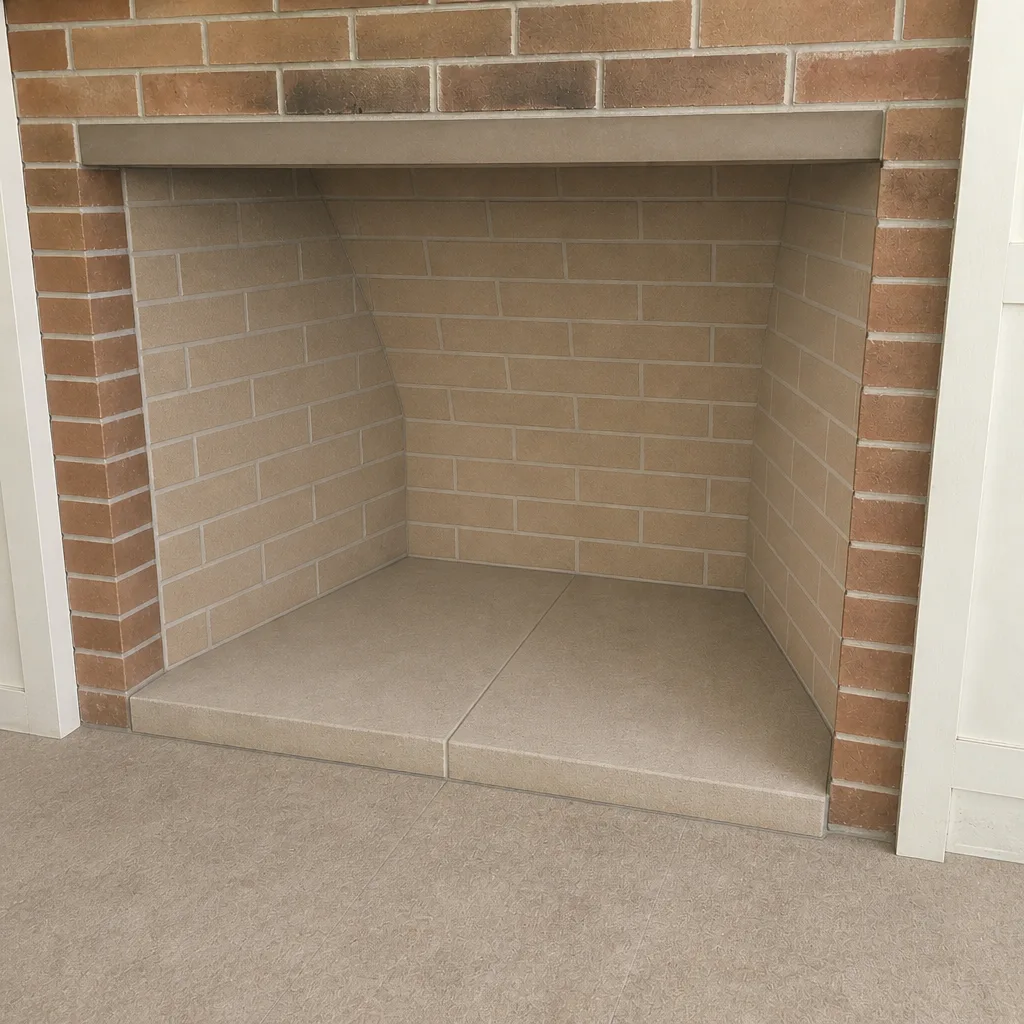
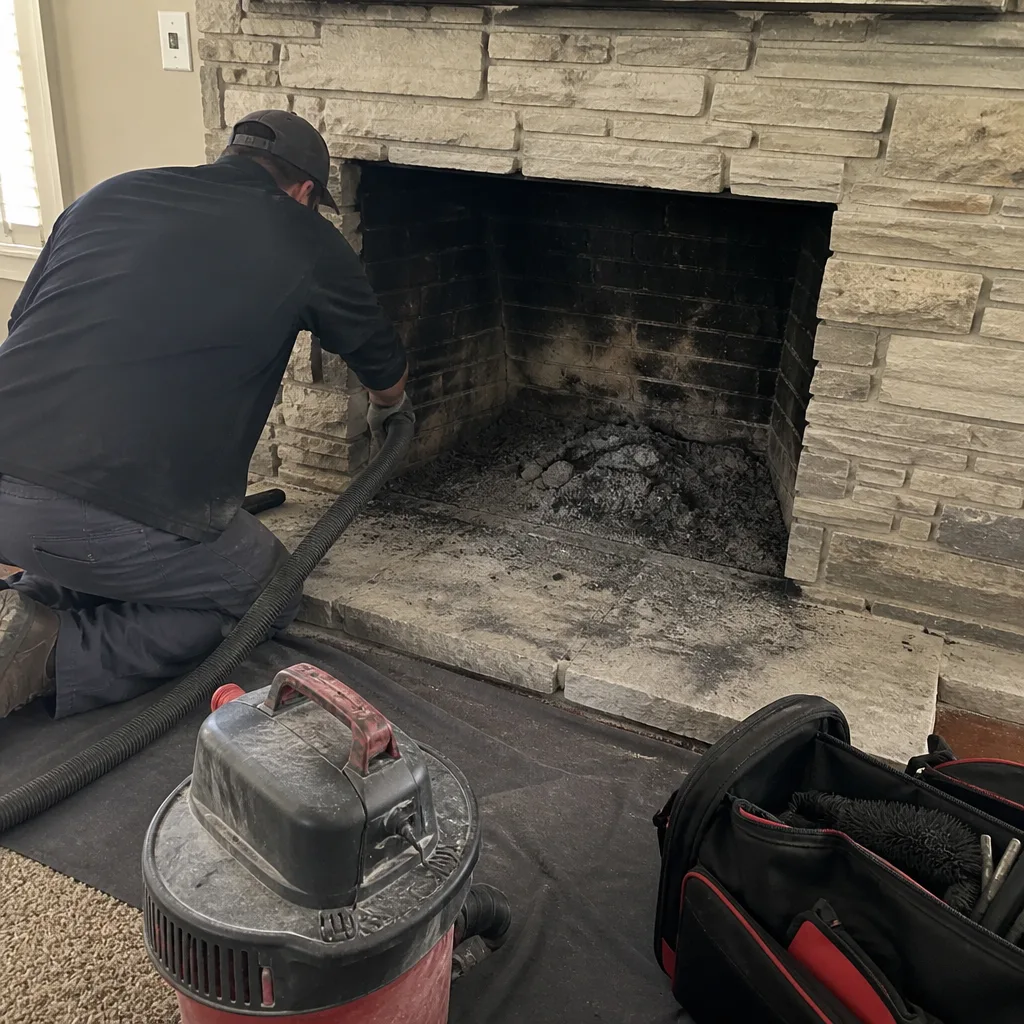
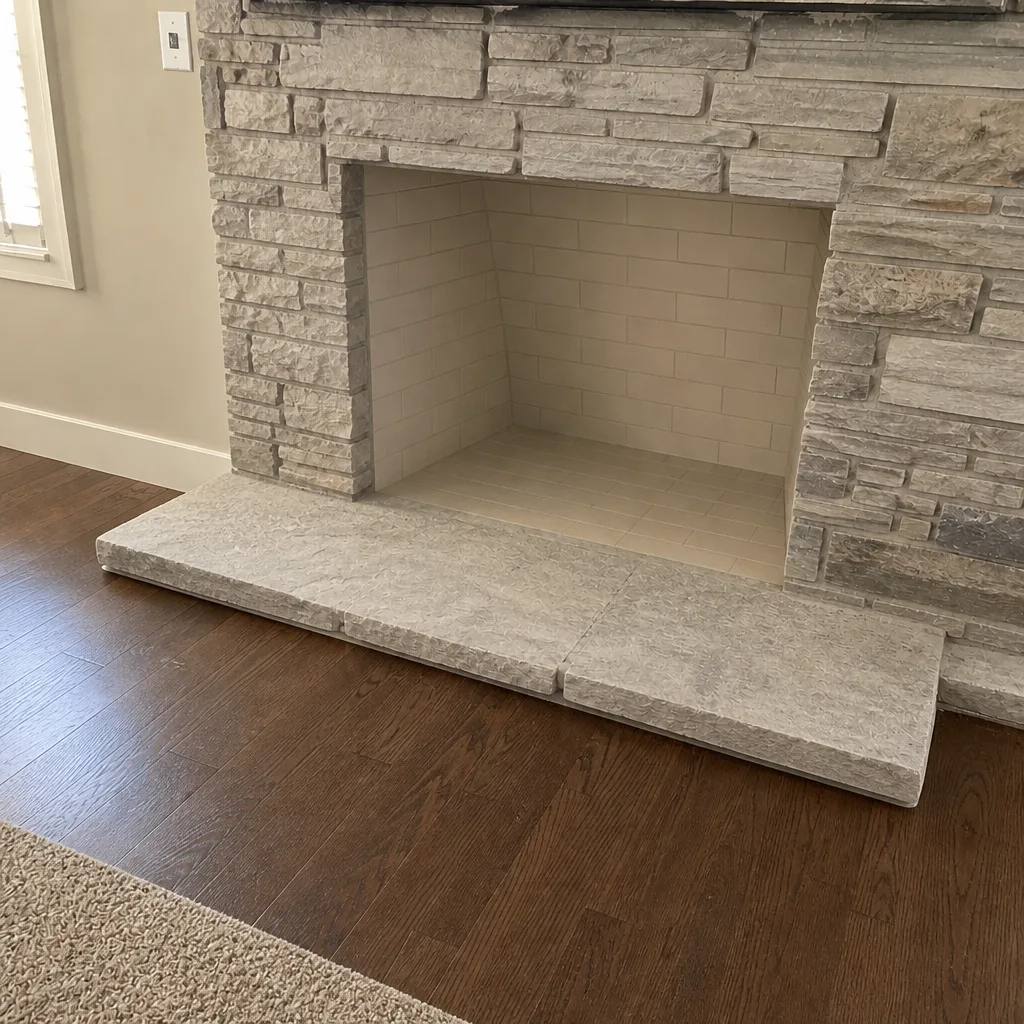
See the difference
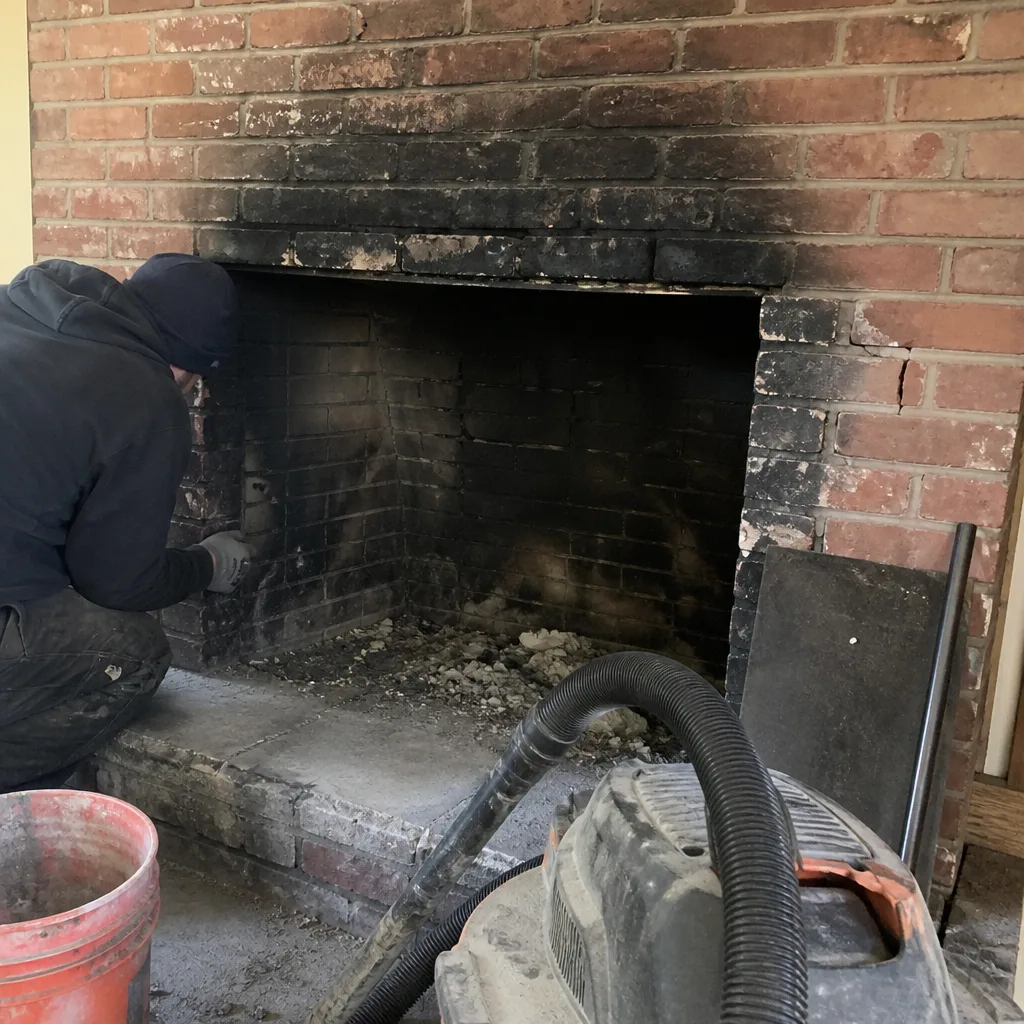 Before
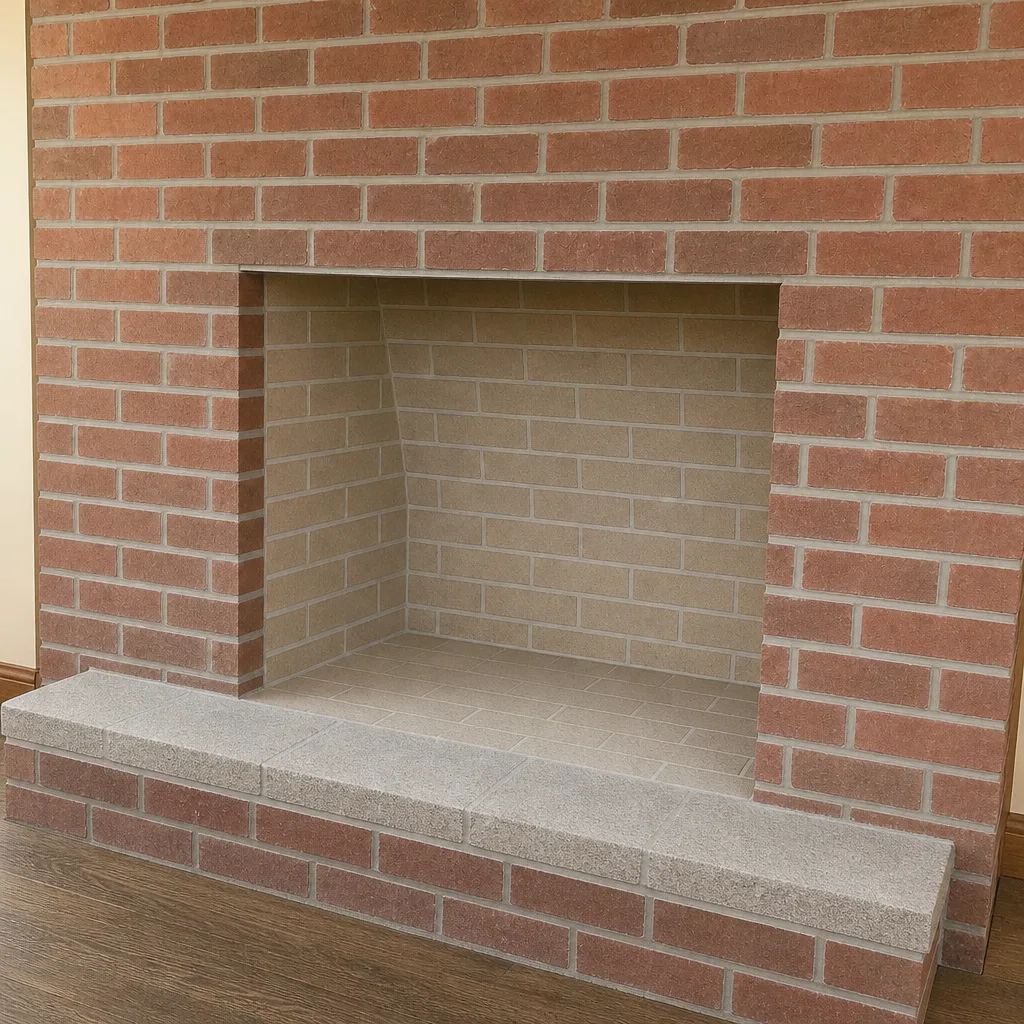 After
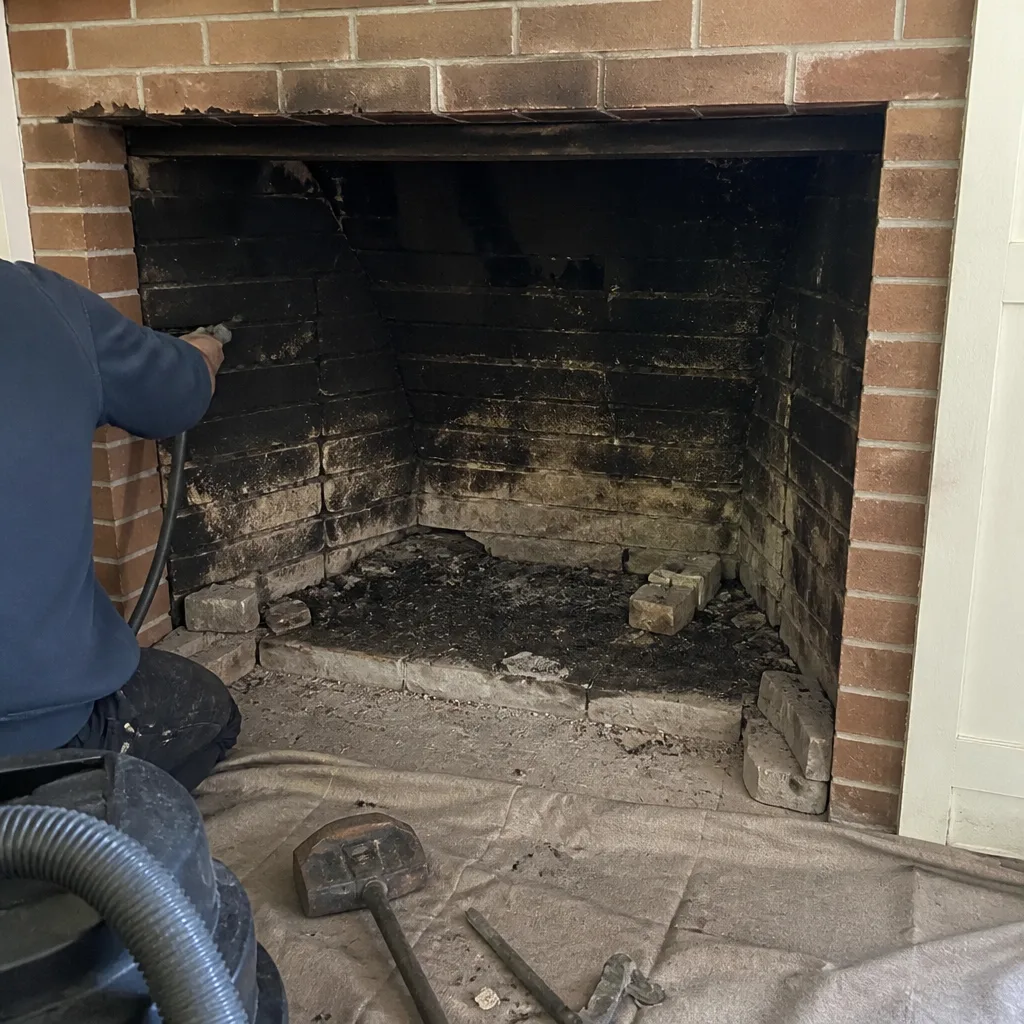 Before
 After
 Before
 After
When to Call a Professional
Some signs can wait for the next scheduled sweep. Others shouldn’t. Call a professional when you smell a strong creosote odor coming from the firebox even when the fireplace is cold, when smoke rolls into the room instead of going up the flue, when the damper doesn’t open or close cleanly, when you can see cracked masonry or missing mortar joints on the chimney exterior, or when you’ve moved into a home and don’t know the last time the chimney was swept. Also call if a bird or animal has nested in the flue; that’s a job for someone with the right tools and a cap install at the end. Stellar Chimney Cleaning offers free estimates in Indianapolis and surrounding areas at (888) 560-8179. We answer 24/7. Fast dispatch from 7am to 7pm, Sunday through Friday. If you call on a Saturday, we’re closed and we’ll book you into the next opening.
For dryer vent cleaning, the sign to watch is drying time. If a load of towels takes two cycles instead of one, the vent run is likely restricted. That’s the right time to call, not after the dryer starts overheating.
Frequently Asked Questions
A single-flue chimney sweep in Indianapolis typically costs $150 to $350, including a Level 1 inspection. Height, creosote stage, and roof access move the number within that range. Call (888) 560-8179 for an exact quote – estimates are free.
You need a new liner when the existing liner is structurally compromised, and that decision should rest on camera evidence, not on a technician’s word alone. If the liner is sound but has isolated cracks, HeatShield resurfacing is often the right answer at half the cost of a full stainless install. If the flue is unlined or sections have failed, DuraFlex stainless is the durable fix. Ask to see the camera record before you decide, and call (888) 560-8179 for an honest read on what your chimney actually needs.
Once a year, ideally in the fall before the first fire of the season. Homes burning daily in winter or using unseasoned wood may need a mid-season check. If creosote reaches Stage 3 (glazed), sweep more often until the buildup is corrected, or ask us to look. Call (888) 560-8179 to get on the fall schedule before burning season.
Creosote accumulates with every fire, and in Stage 3 form it can ignite. A chimney fire can damage the liner without the homeowner knowing it happened. The quieter risk is water: a cracked crown lets water into masonry, which spalls liners over a winter or two. Neither risk is dramatic in a single season; both compound over multiple. Call (888) 560-8179 for a sweep and inspection – estimates are free.
Because “chimney cleaning” covers a wide range of scope. A brush-and-go is not the same as a sweep plus documented inspection plus a photo report. Ask every company you call what’s included, then compare like for like. If two quotes are far apart and one includes a Level 2 camera inspection and the other doesn’t, the price difference isn’t profit – it’s the inspection.
Older neighborhoods like Meridian-Kessler, Broad Ripple, and Irvington have a lot of 1920s to 1960s homes with original clay liner systems and multiple flues, which raises the sweep cost when both flues need cleaning. Newer suburban homes in the outer townships often have prefab factory-built chimney systems that take different tooling and a different set of replacement components. Either way, telling the scheduler the home’s approximate age and the number of flues gets you a more accurate quote before anyone arrives.
The Bottom Line
Chimney cleaning quotes vary by 300% in Indianapolis because “chimney cleaning” isn’t a defined scope; it covers everything from a quick brush to a documented inspection with a camera. A fair all-in price for a typical Indianapolis masonry chimney is $150 to $350 for the sweep plus Level 1, and any repair quote above that should be backed by photos and specific material specifications. The risks of deferring are real but gradual: creosote builds toward ignition, water finds the crack, and a $300 repair becomes a $2,000 reline. If you want the whole system looked at – flue and dryer vent – one call covers it. Our technicians have up to 8 years of experience and work with professional-grade materials like DuraFlex, HeatShield, and Olympia Chimney, and we can diagnose and fix in the same relationship. Call (888) 560-8179 for a free estimate. We answer 24/7. Fast dispatch from 7am to 7pm, Sunday through Friday.
Written by the team at Stellar Chimney Cleaning.